
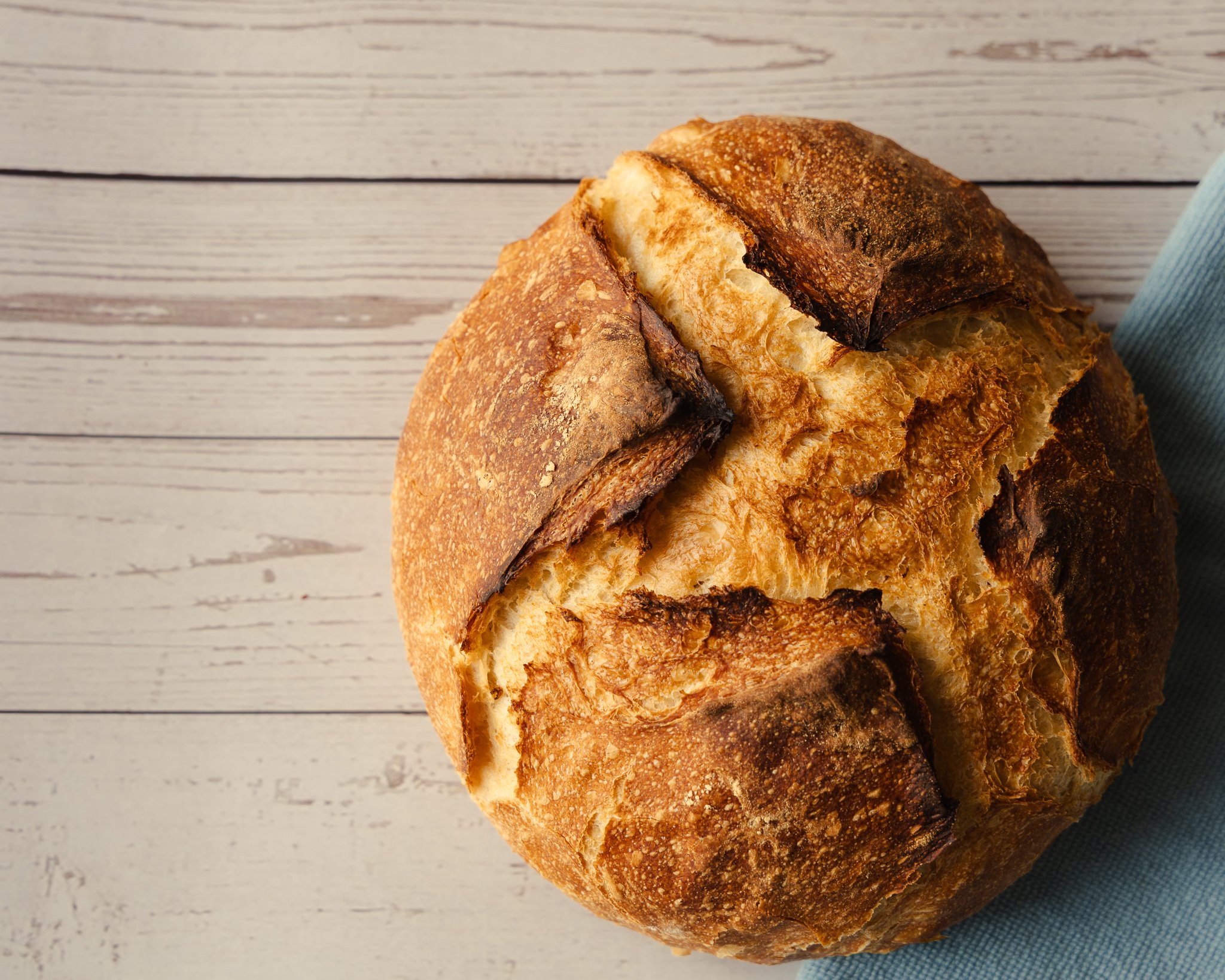
Four ingredients. Flour, water, salt, yeast. No fat, no sugar, nothing to hide behind - which is exactly why this loaf teaches you more about baking than almost anything else in the kitchen.
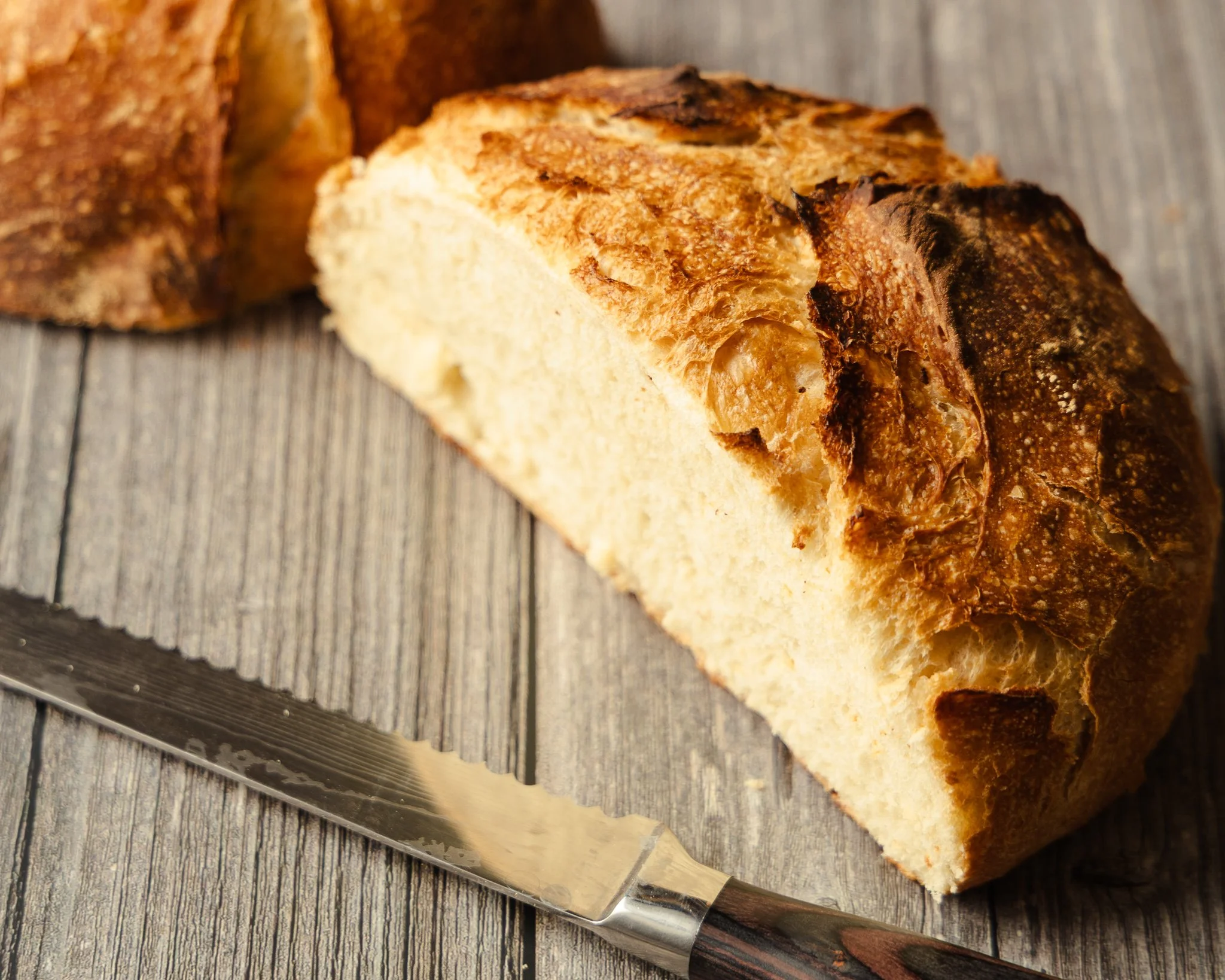
It's called lean because there's nothing in it but the essentials. Everything - the crackly crust, the open airy crumb, the deep flavor - comes from fermentation and technique. Get this loaf right and sourdough, baguettes, and pizza dough all get easier.
Why this recipe works
70% hydration is the sweet spot: wet enough for an open crumb, dry enough to handle.
Stretch-and-folds instead of kneading build strength gently, over time.
The Dutch oven traps steam, which is what gives you oven spring and that professional crust at home.
An overnight cold proof buys you flavor and makes scoring easy. Not required — but worth it.
Ingredients
500 g bread flour
350 g water
10 g fine salt
1 tsp instant yeast (3 g)
Method
Mix. Combine everything to a shaggy dough. No kneading yet.
Autolyse. Rest 20–30 minutes. The flour hydrates; gluten starts building on its own.
Stretch and fold. 3–4 rounds, one every 20 minutes.
Bulk ferment. 2–3 hours at room temperature — look for a 50–75% rise, a slight jiggle, and bubbles.
Shape. Form a tight ball on a lightly floured surface. Surface tension decides your oven spring.
Proof. 45–60 minutes at room temp, or overnight in the fridge.
Bake. Preheat oven and Dutch oven to 245 °C (475 °F). Score the loaf. Bake 20 minutes covered, then 20–25 minutes uncovered until deeply golden.
Baker's notes
The failure points are almost always the same three: over-proofed (flat loaf), under-proofed (dense crumb), or shaped without enough surface tension (no rise). The dough will be sticky — work with wet hands instead of adding flour.
Store at room temperature in a paper bag; plastic kills the crust. Slice before freezing and reheat at 175 °C (350 °F) for 10 minutes.
Variations once you've got the base loaf down: sesame seeds or rosemary folded in, part whole-wheat flour, 65% hydration for easier handling, 75–80% when you want a real challenge.
From my kitchen — a regular bake, photographed as made.

Lean Artisan Bread
Four ingredients. Flour, water, salt, yeast. No fat, no sugar, nothing to hide behind - which is exactly why this loaf teaches you more about baking than almost anything else in the kitchen.
It's called lean because there's nothing in it but the essentials.
Ingredients
Instructions
- Mix. Combine everything to a shaggy dough. No kneading yet.
- Autolyse. Rest 20 to 30 minutes. The flour hydrates; gluten starts building on its own.
- Stretch and fold. 3 to 4 rounds, one every 20 minutes.
- Bulk ferment. 2–3 hours at room temperature. Look for a 50 to 75% rise, a slight jiggle, and bubbles.
- Shape. Form a tight ball on a lightly floured surface. Surface tension decides your oven spring.
- Proof. 45 to 60 minutes at room temp, or overnight in the fridge.
- Bake. Preheat oven and Dutch oven to 245 °C (475 °F). Score the loaf. Bake 20 minutes covered, then 20 to 25 minutes uncovered until deeply golden.
Notes
Baker's notes
The failure points are almost always the same three: over-proofed (flat loaf), under-proofed (dense crumb), or shaped without enough surface tension (no rise). The dough will be sticky. Work with wet hands instead of adding flour.
Store at room temperature in a paper bag; plastic kills the crust. Slice before freezing and reheat at 175 °C (350 °F) for 10 minutes.
Variations once you've got the base loaf down: sesame seeds or rosemary folded in, part whole wheat flour, 65% hydration for easier handling, 75 to 80% when you want a real challenge.